For Bay Area homeowners considering a new lawn, one of the most important questions is how long Artificial Grass actually lasts. Installing synthetic turf is a significant home improvement project, so homeowners naturally want to know that their investment will continue looking great for years. With quality materials, professional installation, and routine care, premium residential artificial turf can provide many years of dependable use. In many residential applications, well-made turf can remain functional and attractive for 15 years or longer, depending on the product, installation, environment, and amount of use.
However, there is no single lifespan that applies to every artificial lawn. Bay Area sunlight, warmer inland temperatures, foot traffic, pets, landscaping conditions, installation quality, drainage, turf construction, and maintenance habits can all affect how quickly synthetic grass ages.
Understanding these factors can help homeowners choose the right product and get more long-term value from their Artificial Grass Installation.
How Long Does Artificial Grass Typically Last?
A high-quality residential artificial lawn can potentially remain functional and attractive for 15 years or longer when the turf is appropriate for the application and properly installed and maintained. Some premium installations can perform well beyond that timeframe depending on environmental conditions and how heavily the surface is used.
That does not mean every lawn will look brand new for exactly 15 or 20 years.
Think about artificial turf lifespan similarly to flooring inside your home. A high-quality floor installed professionally in a lightly used room might remain attractive much longer than lower-quality flooring installed incorrectly in a busy entryway.
Synthetic turf works similarly.
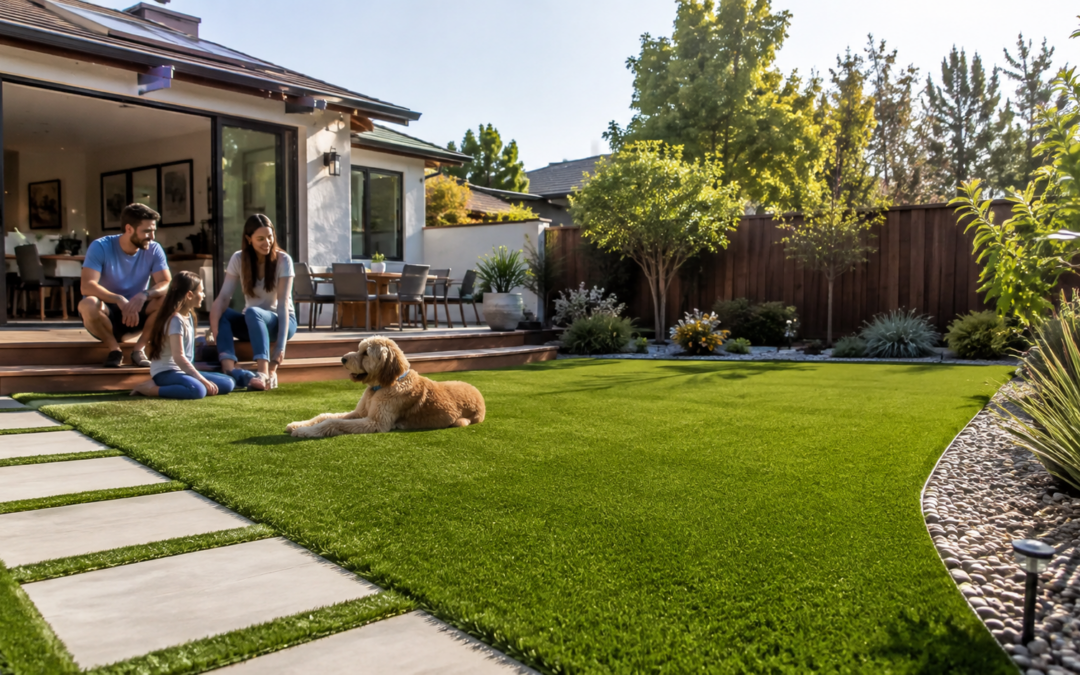
A decorative front yard may experience very little traffic and could remain attractive considerably longer than turf installed in a backyard where children, dogs, outdoor furniture, and entertaining create constant activity.
The goal should not simply be finding the cheapest turf. It should be creating a complete turf system designed for the way your outdoor space will actually be used.
Bay Area Sun and Heat Can Affect Turf Lifespan
The Bay Area includes a wide variety of microclimates. Some neighborhoods experience mild coastal conditions, while communities farther inland can experience significantly warmer summer temperatures and stronger direct sunlight.
Synthetic turf installed in locations receiving extended direct sunlight should be manufactured with outdoor durability and UV exposure in mind. Quality turf fibers and backing systems are specifically designed to withstand outdoor conditions over an extended period.
Premium turf manufacturers also pay attention to materials and construction techniques that improve durability in sunny environments. Turf products can incorporate different fiber materials, multilayer backing systems, drainage technologies, and designs intended for higher temperatures and heavier outdoor use.
This becomes particularly important for communities farther from the immediate coast, where summertime temperatures can be considerably warmer.
Homeowners in areas such as Sacramento County, San Joaquin County, Contra Costa County, and portions of Santa Clara County may therefore have different environmental considerations than homeowners closer to San Francisco Bay.
Selecting a turf product specifically suited for your property is one reason professional product selection and installation matter.
Quality of the Artificial Grass Matters
Not all synthetic grass is manufactured to the same standard.
Two turf products may look nearly identical when viewed as small samples, yet perform very differently after years of exposure to sunlight, foot traffic, pets, rainfall, outdoor furniture, and everyday family use.
Several characteristics can influence durability, including:
- Turf fiber construction
- Blade density
- Stitch rate
- Backing strength
- Drainage design
- Infill compatibility
- UV resistance
- Materials used during manufacturing
- Intended application
Field of Green emphasizes premium American-made artificial grass products and offers multiple synthetic grass options so the turf can be matched to the specific residential or commercial application rather than treating every project the same.
Choosing quality materials upfront may increase the initial Artificial Grass Cost, but longevity is an important part of calculating the true value of the project.
A cheaper product that requires significant repairs or earlier replacement may ultimately cost more than investing in a more durable turf product from the beginning.
Professional Artificial Grass Installation Can Make a Major Difference
The quality of the turf itself is only one part of a successful project.
What happens underneath the grass can be just as important.
A professional Artificial Grass Installation typically involves evaluating the property, removing existing landscaping when necessary, preparing and compacting the base, planning drainage, positioning and securing the turf, joining seams, trimming edges, adding appropriate infill, and completing the surface according to the requirements of the specific product.
Proper base preparation can significantly influence how well the finished lawn performs over the years.
Poor compaction can lead to uneven areas. Inadequate drainage can allow water to collect. Poor seam construction can create visible separation. Incorrect edge installation can allow sections of turf to move or lift.
This is why homeowners comparing Astro Turf Installation options should look beyond the advertised price per square foot.
Ask what is actually included in the installation process and what type of preparation will be completed before the turf is installed.
Foot Traffic Changes How Quickly Turf Wears
How you use your yard will have a major impact on turf lifespan.
Consider two different lawns.
The first is a front yard primarily intended to improve curb appeal. People occasionally walk across it, but most of the lawn receives very little direct activity.
The second is a backyard where children play every afternoon, dogs repeatedly run across the same areas, outdoor furniture gets moved frequently, and friends and family gather outside throughout the year.
Even if both properties use the same turf product, those lawns are likely to experience very different levels of wear.
High-traffic areas may benefit from more durable turf fibers or products specifically designed for active residential environments.
This is another reason the best Turf Grass is not necessarily the same product for every homeowner.
The product should reflect how the space will actually be used.
Dogs Can Affect Turf Wear
Artificial turf can be an excellent option for pet owners because it eliminates many common problems associated with natural lawns, including mud, worn dirt patches, digging damage, and uneven grass growth.
However, dogs also tend to create predictable traffic patterns.
A dog that runs along the same fence or pathway every day can gradually put significantly more pressure on one portion of the lawn than other areas.
Pet turf installations also require thoughtful drainage and cleaning considerations.
If you have dogs, tell your installer how many pets you have, their approximate size, and how they normally use the yard. This information can help determine which turf and installation system best fits your property.
Rather than installing general-purpose Turf Grass, homeowners with active dogs may benefit from products specifically designed around pet use, drainage, cleaning, durability, and odor management.
Proper Drainage Protects the Overall Turf System
Drainage does more than prevent puddles.
The base beneath artificial turf needs to properly manage rainfall, irrigation runoff from surrounding landscaping, pet liquids, and other moisture.
Although the Bay Area is known for relatively dry summers, seasonal rainfall still makes proper drainage an important part of artificial turf installation.
A professionally prepared base helps water move through and away from the turf rather than collecting beneath the surface.
Properties with unusual grading, clay-heavy soils, existing drainage problems, slopes, or nearby hardscaping may require additional planning before installation begins.
Addressing those conditions before the turf is installed can help protect your investment and reduce the likelihood of future problems.
Maintenance Still Matters
Artificial turf is low maintenance, but low maintenance does not mean zero maintenance.
Basic care can help keep the lawn looking better throughout its lifespan.
Homeowners should periodically remove leaves, branches, and other debris. High-traffic areas may occasionally need brushing to help turf blades remain upright. Pet areas should be cleaned as necessary, and spills should be addressed instead of being allowed to remain on the surface.
You should also periodically inspect the lawn for unusual changes around seams, edges, high-traffic zones, or areas near landscaping features.
Catching a small issue early is usually preferable to allowing it to become a larger problem.
Compared with natural grass, artificial turf eliminates routine mowing and can dramatically reduce traditional lawn maintenance requirements. It can also help homeowners maintain a consistently green outdoor space without relying on the same level of watering required by conventional lawns.
Reflected Heat From Windows Deserves Attention
One issue homeowners sometimes overlook is concentrated reflected sunlight.
Certain highly reflective or energy-efficient windows can redirect sunlight onto a concentrated portion of landscaping. In some situations, reflected heat can become significantly more intense than ordinary direct sunlight.
If your property contains windows that create noticeable concentrated reflections, mention this during the planning process.
An experienced installer can evaluate the location and recommend appropriate turf materials or other potential solutions.
This is particularly important when installing artificial turf immediately adjacent to a home, fence, retaining wall, patio, or other structure where reflected sunlight may repeatedly hit the same location.
Infill and Turf Support Can Influence Appearance
Depending on the turf system, infill can help provide stability and support turf fibers.
The appropriate type and amount can vary based on the product and intended application.
Over time, heavily trafficked areas may require additional attention as infill shifts or turf fibers become compressed.
Premium turf systems should be viewed as complete landscaping assemblies rather than simply rolls of green carpet placed over dirt.
Backing construction, base preparation, turf selection, drainage, seams, infill, and installation methods all work together to influence long-term performance.
How Artificial Turf Cost Relates to Lifespan
Homeowners researching Artificial Turf Cost understandably want to compare installation prices.
But the lowest initial quote does not always represent the lowest long-term cost.
Imagine one installation costs less because it uses lower-grade turf, limited base preparation, fewer drainage improvements, or less experienced labor.
Another project costs more initially but includes premium turf, detailed base preparation, professional drainage planning, experienced installation, and stronger warranty protection.
Looking only at the first invoice does not tell you which project represents the better value.
When comparing Artificial Grass Cost, consider:
- Expected product durability
- Product warranty
- Installation warranty
- Turf quality
- Base preparation
- Drainage
- Installer experience
- Product origin and manufacturing quality
- Suitability for your specific application
- Expected maintenance
A premium installation that remains attractive and functional for many years may provide considerably stronger long-term value than a less expensive system requiring premature replacement or repairs.
Why Premium Made-in-USA Artificial Grass Is Worth Considering
Material quality matters when you expect a landscaping investment to withstand years of Bay Area sunshine, changing temperatures, pets, children, outdoor activities, and everyday traffic.
Field of Green emphasizes premium American-made synthetic grass products designed around realism, durability, and different applications, including residential landscapes, pet areas, golf spaces, pools, playgrounds, and commercial environments.
For homeowners comparing products, asking where the turf is manufactured and what warranty supports the product is worthwhile.
The cheapest roll of turf available online may look appealing initially, but artificial grass should be viewed as a long-term landscaping system rather than a temporary cosmetic upgrade.
Quality turf combined with quality installation can make a meaningful difference in how the surface looks and performs years after installation.
Artificial Grass Lifespan Throughout the Bay Area and Surrounding Communities
The Bay Area and surrounding communities contain dramatically different microclimates, which makes local installation experience valuable.
Properties close to the coast may experience cooler temperatures and greater moisture, while inland communities can experience much warmer summers and stronger direct sunlight.
In Sacramento County, homeowners considering artificial turf in Sacramento, Elk Grove, and Rosemont may need to account for intense summer heat and direct sunlight.
In San Francisco County, properties in San Francisco may experience cooler temperatures but can have smaller yards, unique grading, shade, dense urban landscaping conditions, or limited access for installation.
Throughout the San Francisco-Oakland region in Alameda and Contra Costa Counties, homeowners in Oakland, Berkeley, Fremont, Concord, and Pleasanton may encounter everything from mild coastal influences to considerably hotter inland conditions.
In San Joaquin County, Field of Green serves communities including Stockton, Tracy, Manteca, Lodi, and Mountain House.
Santa Clara County homeowners in San Jose, Palo Alto, Cupertino, Sunnyvale, and Santa Clara can also benefit from choosing turf and installation methods appropriate for their property’s sunlight, traffic, drainage, and intended use.
Wherever your home is located throughout the Bay Area or surrounding communities, matching the product to the property is one of the best ways to maximize the lifespan of your investment.
Frequently Asked Questions About Artificial Grass Lifespan
How many years does artificial grass last?
Premium residential synthetic grass can potentially last around 15 years or longer depending on product quality, installation, sunlight exposure, traffic, maintenance, and how the lawn is used. Some high-quality installations can continue performing beyond that timeframe.
Does Bay Area heat damage artificial grass?
Quality outdoor synthetic turf is designed for exposure to sunlight and changing weather conditions. However, warmer inland Bay Area communities can experience significant summer heat, making turf quality and professional installation especially important.
Does artificial grass fade?
Outdoor synthetic turf products are designed to withstand UV exposure, but long-term appearance depends heavily on the quality and construction of the turf. Choosing premium turf designed specifically for outdoor landscaping can help support long-term color and appearance.
Can dogs shorten the lifespan of artificial turf?
Dogs can increase traffic in specific areas, particularly along fences and common running paths. Choosing pet-appropriate turf, installing adequate drainage, cleaning regularly, and using professional installation methods can help the lawn withstand heavy pet use.
Does artificial grass require maintenance?
Yes, but maintenance is generally much simpler than maintaining natural grass. Removing debris, cleaning pet areas, brushing high-traffic locations when needed, and periodically inspecting seams and edges can help maintain the lawn’s appearance.
Is professional installation worth the additional cost?
Professional installation can help ensure proper base preparation, drainage, seams, edges, infill, and product placement. Since these components directly influence long-term performance, installation quality should be considered alongside the turf itself when comparing project costs.
Get More Life From Your Artificial Grass Investment
The lifespan of Artificial Grass depends on much more than the number printed on a warranty. Product quality, Bay Area climate conditions, UV exposure, drainage, foot traffic, pets, maintenance, base preparation, and installation quality all contribute to how your lawn performs over time. Choosing premium American-made turf and working with experienced professionals can help homeowners create a lawn designed for immediate curb appeal and long-term performance. If you’re considering artificial turf for your home in the Bay Area or surrounding communities, Field of Green can help you compare products, evaluate your property, and choose an installation system appropriate for your space. Contact us today for a free estimate and discover how professional artificial grass installation can transform your outdoor space for years to come.
Frequently Asked Questions About Artificial Grass Lifespan in the Bay Area
How long does artificial grass last in the Bay Area?
High-quality artificial grass can often last 15 years or longer when it is professionally installed and properly maintained. Its actual lifespan depends on turf quality, UV exposure, foot traffic, pets, drainage, maintenance, and the quality of the installation.
What affects the lifespan of artificial grass the most?
The biggest factors affecting artificial grass lifespan are product quality, installation quality, sunlight exposure, drainage, foot traffic, pet activity, and routine maintenance. A premium turf product installed over a properly prepared base will generally perform better over time than lower-quality turf installed without adequate site preparation.
Does artificial grass last as long in hot Bay Area communities?
Yes, quality artificial grass can perform well in warmer Bay Area and surrounding inland communities. However, locations that experience stronger sunlight and higher summer temperatures may benefit from turf specifically designed for UV resistance, durability, and heat exposure.
Does artificial grass fade in the sun?
Quality artificial grass is manufactured to resist UV exposure and maintain its appearance outdoors. Over many years, some gradual changes may occur, but premium UV-resistant turf is designed to reduce fading and withstand prolonged sunlight.
Can reflected sunlight from windows damage artificial grass?
Yes, concentrated sunlight reflected from certain windows can create unusually high surface temperatures in specific areas. Homeowners should mention reflective windows during an artificial grass installation consultation so the installer can evaluate potential heat exposure and recommend appropriate solutions.
How long does artificial grass last with dogs?
Artificial grass can last many years in homes with dogs when the turf is designed for pet use and includes proper drainage. High-traffic running paths, frequent pet activity, and cleaning habits can affect lifespan, so choosing durable pet-friendly turf is important.
Does artificial grass require maintenance to last longer?
Yes. Artificial grass is low maintenance, but occasional care can help extend its appearance and performance. Homeowners should remove leaves and debris, clean pet areas, brush heavily used sections when needed, and periodically inspect seams and edges.
How does professional artificial grass installation affect lifespan?
Professional installation can significantly affect how long artificial grass lasts. Proper base preparation, grading, drainage, seam construction, edge securing, and infill help keep the turf stable and reduce the risk of uneven areas, shifting, drainage problems, or premature wear.
Is more expensive artificial grass likely to last longer?
Not always, but higher-quality turf usually includes better materials, stronger backing, improved UV resistance, and construction designed for long-term outdoor use. When comparing Artificial Grass Cost or Artificial Turf Cost, homeowners should consider product quality, warranty coverage, installation methods, drainage, and expected lifespan instead of comparing price alone.
How often does artificial grass need to be replaced?
There is no fixed replacement schedule for artificial grass. Many premium residential installations can remain attractive and functional for 15 years or longer. Replacement may eventually become necessary when fibers become heavily worn, backing deteriorates, seams fail, or the turf no longer meets the homeowner’s appearance or performance expectations.
Is artificial grass a good long-term investment for Bay Area homeowners?
Artificial grass can be a strong long-term landscaping investment for Bay Area homeowners who want a consistently green lawn with less traditional lawn maintenance. Its long-term value depends on choosing quality turf, professional installation, proper drainage, and a product suited to the property’s climate and intended use.
What type of artificial grass lasts the longest?
The longest-lasting artificial grass is typically premium turf designed specifically for the property’s intended use. Residential lawns, pet areas, play spaces, and high-traffic yards may require different turf specifications. Durable fibers, strong backing, effective drainage, UV resistance, and professional installation all contribute to long-term performance.